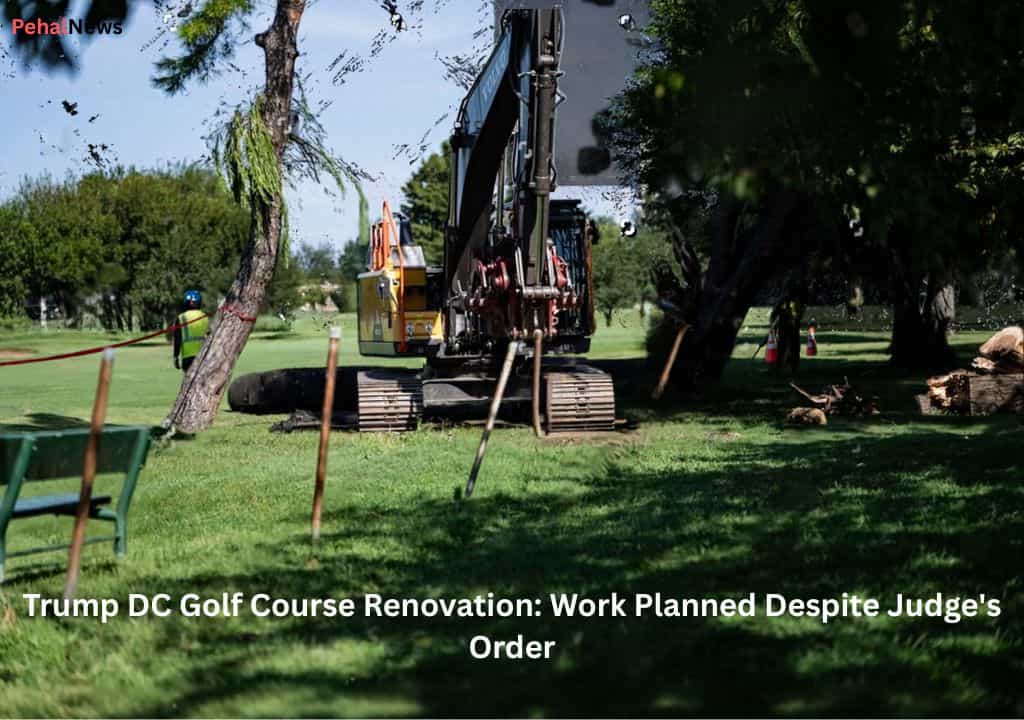
President Donald Trump says renovation of Washington’s historic East Potomac Golf Links will begin November 15, 2026, and the public golf course will close for approximately 15 months. The Trump DC golf course renovation has sparked a legal battle over tree removal, environmental reviews, historic preservation and the future of affordable public recreation.
Trump DC Golf Course Renovation: What Happened?
President Donald Trump has announced plans to begin a major redevelopment of Washington, D.C.’s historic East Potomac Golf Links on November 15, 2026, despite an ongoing court dispute over work at the public golf facility.
The Trump DC golf course renovation proposal would close the course for approximately 15 months while it is transformed into a championship-level golf destination. Trump has said the redesigned facility would remain open to the public and could eventually host major professional golf tournaments.
However, the announcement comes amid litigation over whether the administration has followed environmental and historic-preservation requirements before making significant changes to the property.
U.S. District Judge Ana Reyes has ordered a halt to further tree removal through October 26 and required advance notice before certain irreversible changes. The dispute intensified after hundreds of trees were removed from the course earlier in October.
The Trump DC golf course renovation is now at the center of a wider debate about presidential authority, public land, environmental protection and compliance with court orders.
According to reporting by Reuters and the Associated Press published October 18, the president’s announced timetable has prompted renewed scrutiny of the administration’s position in court.
What Is Trump Planning for East Potomac Golf Links?
Trump announced the Trump DC golf course renovation in a social media post on October 18, saying the Interior Department and golf course architect Tom Fazio had developed a plan for a world-class championship facility.
The president described the existing course as outdated and in poor condition. He said the proposed redevelopment would create a destination capable of hosting major tournaments, including the U.S. Open and Ryder Cup.
Under the announced schedule, East Potomac Golf Links would close on November 15 and reopen approximately 15 months later. That timetable would keep golfers away from the facility for more than a year while construction and redevelopment take place.
The administration has argued that the project would improve the course and make better use of its location near the Potomac River and Washington’s famous monuments.
The Trump DC golf course renovation is part of a broader effort by the president to reshape prominent sites in the capital. Other projects associated with his administration have also drawn public debate and legal challenges over preservation, costs and the use of public property.
However, an announced schedule is not the same as final legal authorization. The golf course remains the subject of a court case, and the scope and timing of permissible work depend on applicable legal requirements and court orders.
Why Did a Federal Judge Restrict Work at the Golf Course?
The legal dispute escalated after federal authorities removed hundreds of trees from East Potomac Golf Links over a holiday weekend in October.
The tree removal prompted objections from groups and individuals seeking to prevent the redevelopment from proceeding before the legal questions were resolved. They argued that the work could cause irreversible changes to a historic public space before environmental and preservation concerns had been adequately examined.
Judge Reyes subsequently ordered a halt to further tree cutting through October 26. Her orders also required advance notification before certain irreversible actions could take place.
The judge criticized the speed and circumstances of the tree removal, raising concerns about the government’s earlier descriptions of the project as being at a preliminary stage.
The Trump DC golf course renovation dispute became more serious because the government had argued in court filings that the proposal remained conceptual, while the president’s public announcement described a developed plan and a specific start date.
The apparent difference between those positions prompted further questions from the court.
The administration has defended the tree removal as work connected to an existing landscape-management plan intended to improve safety and restore the property’s historic design. Officials have argued that the work was not simply a consequence of Trump’s redevelopment ambitions.
The court has not made a final determination on every issue raised in the lawsuit. The current restrictions should therefore be understood in the context of ongoing litigation, rather than as a final ruling on the entire renovation proposal.
The Dispute Over Hundreds of Trees
Tree removal has become one of the most contentious parts of the Trump DC golf course renovation.
Reports by Reuters, the Associated Press and other news organizations said approximately 400 to 500 trees were removed from the property during the early-October work. Exact figures vary between reports and descriptions of the planned and completed removal.
The administration has maintained that the tree work was associated with a 2019 landscape plan that predated the president’s latest proposal. Officials said the work was intended to improve safety and restore elements of the course’s original landscape.
Critics question why the plan was implemented so rapidly after Trump expressed interest in transforming East Potomac into a championship facility.
Judge Reyes examined whether the tree removal was genuinely independent maintenance work or was driven by the urgency surrounding the proposed redevelopment. Her ruling raised concerns about the timing and the potential consequences of irreversible changes before the court could fully consider the dispute.
For opponents, the Trump DC golf course renovation raises a basic question: should a major public landscape be substantially altered before its environmental and historic significance has been properly assessed?
The administration argues that improving the property is compatible with maintaining its public value. The plaintiffs say the government must follow the law before proceeding.
The next phase of the legal process will help clarify which activities can continue and whether additional safeguards are required.
Who Is Challenging the Trump DC Golf Course Renovation?
The DC Preservation League and other plaintiffs have challenged the administration’s plans for East Potomac Golf Links.
Their legal arguments concern the possible failure to comply with environmental review and historic-preservation requirements, as well as the administration’s authority to make substantial changes to federal parkland.
The plaintiffs contend that the redevelopment could irreversibly damage a historic recreational area before its effects have been fully studied.
The Trump DC golf course renovation has also attracted attention from local golfers who fear that a championship-oriented redesign could change the facility’s character and reduce access for ordinary residents.
The administration has not agreed with the plaintiffs’ characterization of the proposal. Government attorneys previously argued that the litigation was premature because the project remained at an early or conceptual stage.
Trump’s October 18 announcement complicated that position by describing a developed plan and naming a closure date.
The plaintiffs are seeking court protection against further actions that could undermine their ability to obtain meaningful relief if the renovation is later found to violate applicable laws.
Their concerns extend beyond the physical golf course. They also involve how the government manages national parkland and whether public consultation and legal review occur before major decisions are implemented.
Why East Potomac Golf Links Matters to Washington Residents
East Potomac Golf Links is a historic public golf facility located on Hains Point in Washington, D.C., with views of the Potomac River and nearby national landmarks.
The course has served golfers of different ages, experience levels and income groups for generations. Its public character is central to the debate over the Trump DC golf course renovation.
The facility is managed as part of a federal park area, and its value extends beyond golf. East Potomac Park also provides space for walking, cycling, fishing, picnicking and other outdoor activities.
The Washington Post reported that East Potomac hosted approximately 124,500 rounds of golf in 2025, making it the busiest public golf facility in the region.
For regular users, the planned 15-month closure would mean losing access to a familiar and relatively affordable recreational venue. Some golfers have questioned whether a high-end championship course would preserve the same level of accessibility.
The redesign could also affect the arrangement of the wider park. Previous descriptions of the proposal have raised questions about the future of existing golf layouts, walking and cycling routes, open recreational areas and historic landscape features.
Trump has said the redesigned course would remain public. However, critics argue that public ownership alone does not guarantee that the facility will remain affordable or equally accessible.
The Trump DC golf course renovation therefore raises an important policy question: how can the government modernize a public recreational facility while protecting the needs of the people who currently use it?
Could the Renovation Make Golf Less Affordable?
One major concern surrounding the Trump DC golf course renovation is the potential effect on green fees and public access.
East Potomac has long provided local residents with an opportunity to play golf without paying the prices associated with private clubs or exclusive championship venues.
Some golfers have expressed concern that transforming the facility into a high-end destination could result in higher fees, fewer available tee times or a course designed primarily for major tournaments.
A championship-level facility can require substantial investment in course design, maintenance, irrigation, landscaping and supporting infrastructure. Those costs may influence future operating decisions, although the administration has not publicly established final green fees for the redesigned course.
Trump has promised that the renovated facility will remain open to the public. That commitment is relevant, but the practical meaning of public access will depend on the final operating arrangements, pricing and availability.
The Trump DC golf course renovation debate is therefore not simply about whether the public will be allowed onto the property. It is also about whether ordinary golfers will be able to afford and use the redesigned facility.
Until the administration releases detailed operating and pricing plans, claims about future affordability remain uncertain.
Trump Administration Seeks Judge’s Removal
The legal dispute has expanded beyond the physical redevelopment.
On October 16, the Trump administration filed a motion seeking Judge Reyes’s disqualification from the case. Government attorneys alleged that her handling of the dispute demonstrated bias against the administration.
The motion reflects growing tension between the executive branch and the judge overseeing the Trump DC golf course renovation lawsuit.
The plaintiffs oppose the request to remove Reyes. The administration’s allegations are arguments presented in a legal filing, not a judicial finding that the judge acted improperly.
A request for disqualification does not automatically suspend existing court orders. Unless those orders are changed or stayed through the applicable legal process, the parties remain subject to them.
The dispute over the judge’s role adds another layer of uncertainty to the project. The court must address both the substantive questions about the redevelopment and the administration’s challenge to the judge’s continued involvement.
The immediate issue remains whether the government can proceed with the work it has announced while complying with the existing restrictions.
Does Trump’s November 15 Announcement Violate the Judge’s Order?
This is the central legal question raised by the latest announcement, but the distinction between announcing a plan and carrying out restricted work is important.
Trump has said that renovation will begin on November 15. Judge Reyes has imposed restrictions on tree removal and required notice before certain irreversible changes. The precise scope of the restrictions and any subsequent court directions will determine what the administration may lawfully do.
The president’s announcement does not by itself prove that the administration has violated the order. A violation would depend on the order’s terms, the activities undertaken and the circumstances in which they occurred.
The court has also sought clarification because the administration previously described the proposal as preliminary. The new announcement could be relevant to whether that description remains accurate.
The Trump DC golf course renovation will therefore remain under legal scrutiny as the November date approaches.
The White House had not immediately provided a detailed public explanation of whether the announced start date was compatible with the judge’s directives, according to reports published October 18.
The next court proceedings and any new filings will be important for determining the project’s legal status.
What Happens Next?
Several developments could shape the future of the Trump DC golf course renovation.
First, the court may clarify the scope of the existing restrictions. The judge can consider the administration’s statements, court filings and the actions taken at the property when determining whether further safeguards are necessary.
Second, the plaintiffs may seek stronger protections. Their legal challenge aims to prevent potentially irreversible changes while the underlying environmental and preservation questions are considered.
Third, the administration may provide more detailed project information. Final designs, environmental assessments, preservation reviews and construction plans could become important evidence in the case.
Fourth, the disqualification motion may affect the proceedings. The court must address the administration’s request according to the applicable legal standards, but the request alone does not resolve the underlying lawsuit.
Finally, the November 15 timetable may change. The announced date depends on the administration’s plans and the legal restrictions in force at that time. It should not be treated as a guarantee that construction will begin as scheduled.
The Trump DC golf course renovation remains a developing story, and future court filings may significantly affect its timeline and scope.
Frequently Asked Questions
1. What is the Trump DC golf course renovation?
It is President Donald Trump’s proposed redevelopment of East Potomac Golf Links in Washington, D.C. The plan aims to transform the historic public facility into a championship-level course.
2. When is the renovation supposed to begin?
Trump announced October 18, 2026, that work would begin on November 15. The course is expected to close for approximately 15 months, subject to the ongoing legal dispute and applicable court orders.
3. Why did a judge halt tree removal?
Judge Ana Reyes restricted further tree cutting after hundreds of trees were removed and concerns arose about the timing, notice and possible connection between the work and the broader redevelopment.
4. Has Trump been found in violation of the judge’s order?
The announcement of a future renovation date does not itself establish a violation. Whether specific actions violate the order depends on its terms and what the administration actually does.
5. Who is challenging the project?
The DC Preservation League and other plaintiffs have challenged the redevelopment, raising concerns about environmental review, historic preservation and the government’s authority to alter the public property.
6. Will the golf course remain open to the public?
Trump says the redesigned facility will remain public. However, final pricing, operating arrangements and access conditions have not been fully established in the reports cited here.
7. Why are residents concerned about the redevelopment?
Some residents fear the renovation could make golf more expensive, reduce recreational space and change the character of a historic public park.
8. What happens next in the lawsuit?
The court may consider further requests for an injunction, clarification of the existing restrictions and the administration’s motion to disqualify Judge Reyes. Future rulings will help determine what work can proceed.
Conclusion
The Trump DC golf course renovation has become a significant legal and public-policy dispute over the future of East Potomac Golf Links. Trump wants to transform the historic facility into a championship-level destination, while plaintiffs argue that the administration must comply with environmental and historic-preservation requirements before making major changes.
The removal of hundreds of trees and the judge’s subsequent restrictions have intensified scrutiny of the administration’s conduct. Trump’s announcement of a November 15 start date has added urgency, but it does not independently settle whether the proposed work can proceed under the existing court orders.
The outcome will depend on the legal process, the evidence presented and any further directions from the court. For Washington residents, the stakes include the preservation of a historic landscape, the future affordability of a public golf course and the continued availability of recreational space in the nation’s capital.
The Trump DC golf course renovation is therefore a story to follow not only for its political implications, but also for what it may reveal about public land management, judicial oversight and the balance between redevelopment and preservation.