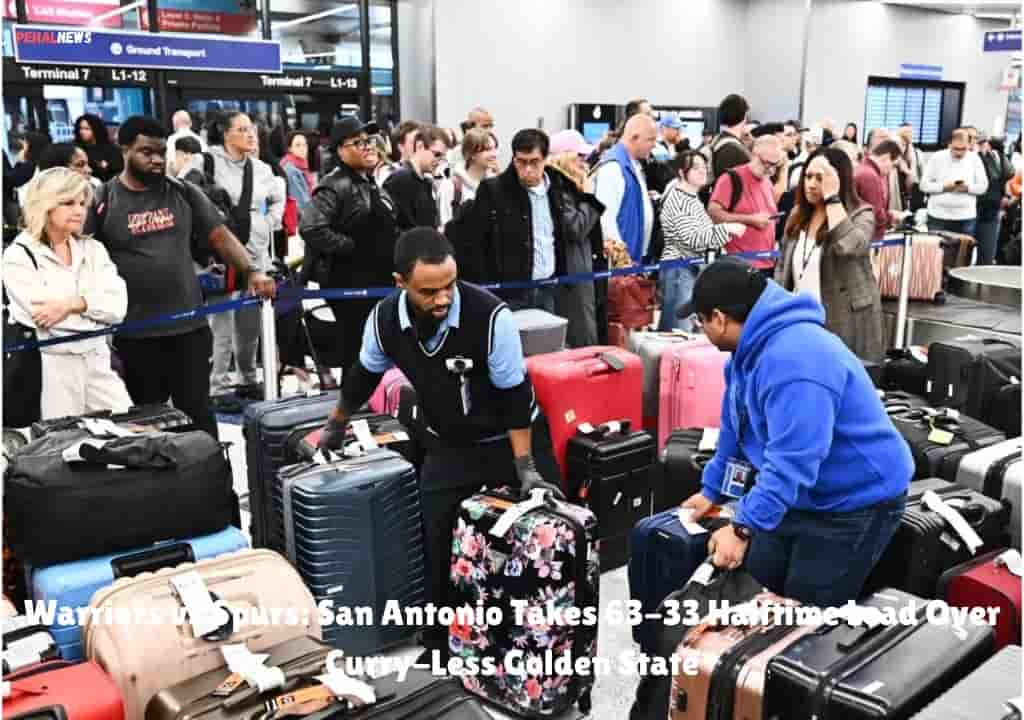
Air travel across the United States is facing continued disruption on Saturday, November 14, after a nationwide Federal Aviation Administration (FAA) ground stop brought departures to a temporary halt following a serious communications failure affecting air traffic control centres. Although the FAA has lifted the restriction and flights have resumed, airlines are still working to restore normal schedules as aircraft and crews remain out of position.
The disruption began on Friday, November 13, when the FAA ordered a rare nationwide ground stop because of communications problems affecting air traffic control operations. The decision forced airlines to pause departures while officials addressed safety concerns. Aircraft already airborne were permitted to land, but thousands of passengers experienced delays, cancellations and changes to their travel plans.
The incident quickly became one of the biggest US news stories, with the search term FAA ground stop attracting millions of searches on Google Trends. Travellers wanted to know whether flights were still grounded, which airports were affected and when normal operations would return.
The FAA subsequently lifted the nationwide restriction after systems were tested and operations began recovering. However, the end of the ground stop did not immediately resolve the disruption. Airlines warned that restoring aircraft schedules, crew assignments and airport operations would take time.
The incident has also renewed questions about the condition of America’s air traffic control infrastructure, particularly the communications systems that are essential for managing flights safely across the country.
FAA Ground Stop: What Happened Across the United States?
The FAA issued the nationwide ground stop on Friday after communications failures affected air traffic control centres.
The agency described the situation as an extraordinary circumstance requiring action for safety reasons. Rather than allowing normal departures to continue while the problem remained unresolved, the FAA instructed airlines to hold flights on the ground.
The restriction affected departures across the country. Aircraft that were already in the air were allowed to land, but airlines could not operate their departure schedules normally while the order remained in place.
Reuters reported that the disruption began at approximately 3:54 p.m. Eastern Time. More than 4,000 aircraft were already airborne towards US airports when the nationwide restriction began.
The situation created significant pressure at major airports. Departures were delayed, arriving aircraft faced operational complications and airport gates became increasingly congested.
The FAA ground stop was lifted after officials assessed the situation and tested the systems involved. However, the initial failure had already created a chain reaction across airline networks.
An aircraft delayed at one airport can affect several later flights. Crew members may reach their next destinations late, aircraft may be unavailable for scheduled departures and passengers may miss connecting services.
That is why the effects of a nationwide ground stop can continue even after the original restriction has ended.
Why Did the FAA Order a Nationwide Ground Stop?
The immediate trigger was a communications failure affecting air traffic control centres.
Air traffic controllers rely on dependable communication systems to coordinate aircraft movements, issue instructions and maintain safe separation between aircraft.
When essential communications systems experience problems, controllers may be unable to carry out their responsibilities with the required level of reliability.
The FAA therefore has procedures for reducing or stopping aircraft movements when operational conditions create safety concerns.
In this case, the agency’s nationwide order was designed to prevent departures from adding further pressure to an already disrupted system.
The decision affected airlines throughout the United States, even though the underlying communications problems were reported at regional air traffic control centres.
Officials have not identified a cyberattack as the cause. Homeland Security Secretary Markwayne Mullin said there was no indication of a malicious attack based on the information available at the time.
The investigation focused on the communications failure and the infrastructure involved.
The FAA ground stop illustrates how a technical problem affecting a critical part of aviation infrastructure can have consequences far beyond the location where the failure first occurs.
FAA Lifts Ground Stop, but Flight Delays Continue Saturday
One of the most important developments for travellers is that the FAA has lifted the nationwide ground stop.
The restriction is no longer preventing normal departures across the country. Airlines have begun restoring services, and flights are operating again.
However, passengers should not assume that every scheduled flight has returned to normal.
The disruption created a backlog of aircraft, passengers and crew members. Airlines must reposition aircraft, arrange replacement crews where necessary and work through delayed departures.
The Associated Press reported that the disruption affected thousands of flights, with at least 600 aircraft diverted and widespread delays and cancellations. Airlines warned that the consequences could continue into Saturday.
Delta and United Airlines said they were resuming operations after the FAA lifted the restriction. Both carriers also warned that restoring their schedules would take time.
For passengers, this means a flight listed as scheduled may still be affected by a delayed aircraft or crew arriving from another airport.
The FAA ground stop has ended, but the operational recovery is a separate process.
Travellers should therefore check their airline’s latest flight status rather than relying only on the original departure time shown on an older booking confirmation.
How Many Flights Were Affected?
The scale of the disruption was significant.
Reuters reported that the nationwide ground stop contributed to more than 1,000 cancellations and nearly 10,000 delays as the incident unfolded.
Flight-tracking figures changed as the disruption continued, so totals depend on the time at which they were recorded.
The Associated Press also reported that at least 600 flights were diverted, with thousands more affected by delays and cancellations.
The impact extended beyond individual passengers.
Airlines had to reorganise aircraft schedules, airports faced congestion and cargo operations were also affected. International services experienced knock-on disruption as flights travelling to or from the United States encountered operational restrictions.
Sports teams and other groups travelling for scheduled events also had to reconsider their plans.
The FAA ground stop demonstrates the interconnected nature of the aviation system. A disruption affecting one part of the network can quickly affect flights, airports and passengers across multiple regions.
Were All US Airports Affected?
The FAA issued a nationwide restriction, meaning the impact was not limited to one airport.
Major airports and smaller facilities experienced disruption as airlines paused departures and adjusted their operations.
The consequences varied depending on local conditions, airline schedules and the number of aircraft already in the air or waiting to depart.
Airports with high passenger volumes were particularly vulnerable to congestion because even a relatively short interruption can create large queues of delayed flights.
International travellers were also affected as airlines adjusted routes and schedules connected to US airports.
However, the exact impact differed between carriers and locations. It would be misleading to suggest that every airport experienced the same number of cancellations or that every flight was delayed.
Passengers should check the status of their individual journeys with the airline operating the service.
What Caused the Communications Failure?
The exact technical sequence behind the communications failure remains an important part of the investigation.
The Associated Press reported that officials attributed the outage to an overloaded, ageing analogue system rather than a cyberattack or the FAA’s new AI-powered system.
This distinction matters because speculation about the cause can spread quickly during a major disruption.
Officials had previously indicated that the incident was being investigated and that there was no evidence at that stage of a deliberate attack.
The failure has nevertheless raised questions about the condition of the country’s air traffic control technology.
Much of the US aviation system depends on infrastructure that must operate reliably every day, including communications equipment, radar systems, data networks and controller facilities.
A failure in one area can create difficulties for the wider system because air traffic control operations are closely coordinated.
The FAA ground stop has therefore renewed debate about the need for modernisation and long-term investment in aviation infrastructure.
Concerns About Ageing US Air Traffic Control Infrastructure
The United States operates one of the world’s busiest aviation networks.
Its air traffic control system must coordinate thousands of aircraft movements while maintaining safety across a vast geographical area.
That responsibility requires reliable technology, sufficient staffing and effective contingency arrangements.
The latest communications failure has highlighted concerns about ageing equipment and the challenges of maintaining systems that have been in service for many years.
Reuters reported that the incident has brought renewed attention to long-standing issues involving outdated infrastructure and controller shortages.
Modernisation is not simply a matter of replacing old computers. Aviation technology must be tested carefully, integrated with existing systems and introduced without compromising operational safety.
The FAA must also ensure that new equipment can communicate reliably with systems used by airlines, airports and other aviation authorities.
The incident could add pressure on policymakers to support upgrades to the country’s air traffic control infrastructure.
Was the FAA Ground Stop Caused by Artificial Intelligence?
Questions about the FAA’s newer technology also emerged during the disruption.
However, the Associated Press reported that officials attributed the failure to an overloaded, ageing analogue system rather than the FAA’s new AI-powered system.
There is no confirmed evidence in the available reporting that artificial intelligence caused the nationwide ground stop.
It is important to separate the existence of newer AI-related projects from the actual technical cause of the communications failure.
Artificial intelligence is increasingly being discussed as a tool that could support aviation operations, data processing and traffic management. But the latest disruption should not be presented as proof that an AI system failed.
The investigation must establish the technical cause using evidence from the systems involved.
Until officials provide a definitive account, claims connecting the incident to a particular technology should be treated cautiously.
What Should Passengers Do If Their Flight Is Delayed?
Travellers with flights scheduled for Saturday should check their airline’s official website or mobile application before leaving for the airport.
Because aircraft and crews may still be out of position, the departure time shown on an earlier booking confirmation may no longer be accurate.
Passengers should also pay attention to notifications from their airline.
If a flight is cancelled, travellers should contact the carrier to discuss rebooking or refund options.
The Associated Press reported that airlines generally owe affected passengers a refund for cancelled flights under applicable rules, even when the disruption is outside their control. The specific options available can depend on the ticket and circumstances.
Passengers should keep records of cancellation notices, booking confirmations and any communications from the airline.
Those travelling internationally should also check connecting flights and any accommodation or transport arrangements affected by the delay.
The FAA ground stop may have ended, but passengers should allow additional time for travel while airline schedules recover.
What Happens Next?
The immediate priority is restoring normal airline operations and understanding exactly why the communications systems failed.
The FAA and relevant authorities will need to examine the incident, determine what happened and identify any changes required to reduce the risk of a similar disruption.
The investigation will also be important for future decisions about aviation technology and infrastructure investment.
Airlines, meanwhile, will continue working through delayed schedules and repositioning aircraft and crews.
The longer-term response may involve upgrading communications equipment, improving backup systems and reviewing how the aviation network responds when critical services become unavailable.
The FAA ground stop has provided a reminder that even a temporary technical failure can create national consequences when it affects a system as interconnected as commercial aviation.
Frequently Asked Questions
1. Is the FAA ground stop still in effect on November 14, 2026?
No. The FAA lifted the nationwide ground stop after the communications problems were addressed and systems were tested. However, delays and cancellations may continue as airlines restore their operations.
2. Why did the FAA ground all departing flights?
The FAA ordered the ground stop after communications failures affected air traffic control centres. The restriction was introduced for safety reasons while officials addressed the problem.
3. How many flights were affected?
Reuters reported more than 1,000 cancellations and nearly 10,000 delays during the disruption. The Associated Press also reported at least 600 diverted flights. Figures varied as the situation developed.
4. Was the FAA outage caused by a cyberattack?
Officials said there was no indication of a malicious attack based on the information available at the time. The cause of the communications failure remains subject to investigation.
5. Did artificial intelligence cause the FAA ground stop?
The Associated Press reported that officials attributed the outage to an overloaded, ageing analogue system rather than the FAA’s new AI-powered system.
6. Will US flights return to normal on November 14?
Airlines have resumed operations, but delays and cancellations may continue while aircraft and crews are repositioned. Passengers should check directly with their airlines for current flight information.
7. Can passengers get refunds after cancellations?
Passengers may be entitled to refunds for cancelled flights under applicable airline and consumer-protection rules. They should check their carrier’s policy and the relevant US Department of Transportation guidance.
Conclusion
The FAA ground stop has exposed how dependent the United States aviation network is on reliable communications infrastructure.
A failure affecting air traffic control centres forced the FAA to temporarily halt nationwide departures, disrupting thousands of flights and leaving passengers facing uncertainty.
Although the restriction has been lifted, the effects are continuing as airlines attempt to restore normal schedules on Saturday, November 14.
The incident has also renewed concerns about ageing aviation technology, communications reliability and the need for long-term infrastructure investment.
For travellers, the most important step is to check flight information directly with their airlines before heading to the airport.
For aviation authorities, the priority is understanding the technical failure and ensuring that the systems responsible for keeping the country’s airspace safe remain reliable.
The FAA ground stop is over, but its consequences and the questions it raises about the future of US air traffic control will continue to be discussed.