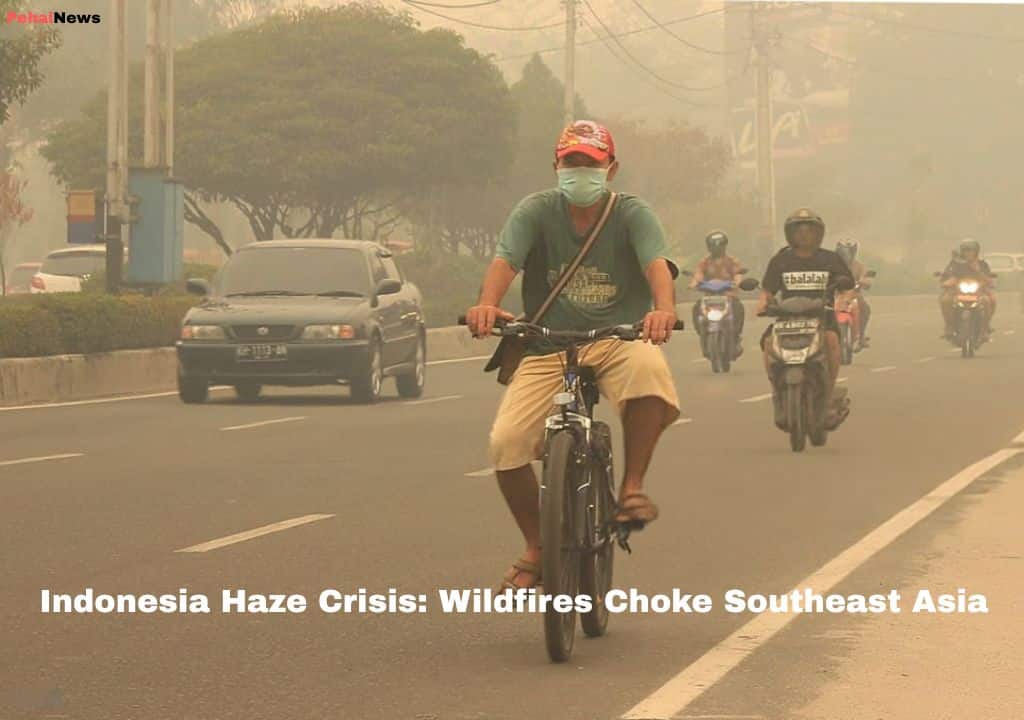
Indonesia is battling its worst wildfire season in more than a decade, with thick haze affecting millions, increasing respiratory illnesses, disrupting travel and raising concerns about the government’s response.
Indonesia Haze Crisis Intensifies as Wildfires Spread Across the Region
The Indonesia haze crisis has developed into a major environmental and public-health emergency, as persistent forest and peatland fires blanket parts of Southeast Asia in thick smoke. The crisis has affected communities across Indonesia, particularly on the islands of Borneo and Sumatra, while pollution has also crossed national borders and disrupted everyday life in neighboring countries.
Reporting by Reuters and other international news organisations in October 2026 describes Indonesia as experiencing its most intense wildfire season since 2015. Prolonged drought, hotter conditions and delayed rainfall have made vegetation and peatlands more vulnerable to burning. The resulting smoke has reduced visibility, aggravated respiratory problems and forced some schools in the region to suspend classes.
The Indonesia haze crisis is also raising difficult questions about land management, forest protection, agricultural burning and government preparedness. Authorities have deployed firefighters and aircraft, but the scale and persistence of the fires have intensified criticism from residents and environmental organisations.
As the emergency continues, the Indonesia haze crisis illustrates how environmental damage in one country can create health, economic and diplomatic consequences across an entire region.
What Is Causing the Indonesia Haze Crisis?
The Indonesia haze crisis has several interconnected causes. The most immediate is the spread of fires through forests, agricultural land and peatlands during an exceptionally dry period.
1. Forest and land fires
Fires have affected parts of Kalimantan, on the Indonesian side of Borneo, and Sumatra. Smoke from burning vegetation has spread into populated areas, leaving cities and towns shrouded in haze.
Some fires are associated with land clearing and agricultural practices. Burning vegetation can be a relatively inexpensive way to clear land, but under dry and windy conditions, flames can spread beyond the intended area. Indonesia prohibits land clearing by burning in many circumstances, although enforcement remains a continuing challenge.
The Indonesia haze crisis demonstrates how fires that begin in fields or degraded landscapes can threaten surrounding forests, settlements and infrastructure.
2. Peatland degradation
Peatlands store large quantities of carbon in layers of partially decomposed organic material. When peatlands dry out, they become vulnerable to fires that can burn below the surface and continue smouldering even after flames disappear.
Reuters reported on October 15 that Indonesian authorities had linked the current fire emergency partly to degraded peatland and said restoration work would be pursued. Peatland restoration can help retain moisture and reduce the risk of future fires, although recovery takes time.
This makes peatland protection a central issue in addressing the Indonesia haze crisis, not simply a secondary environmental concern.
3. Drought and El Niño
El Niño is a natural climate pattern associated with warmer-than-average sea-surface temperatures in parts of the tropical Pacific. Its effects vary by region, but it can contribute to drier conditions in Indonesia.
In 2026, unusually persistent dry weather has left many areas without sufficient rainfall to extinguish fires. The Indonesia haze crisis has consequently become harder to manage, because firefighters are confronting both active flames and landscapes that remain highly susceptible to new outbreaks.
Weather conditions alone do not explain every fire. Land-clearing practices, degraded ecosystems and prevention measures also influence how widely fires spread.
Health Impacts: Smoke Becomes a Daily Threat
One of the most serious consequences of the Indonesia haze crisis is its effect on human health.
Wildfire smoke contains fine particulate matter, including PM2.5, which can penetrate deep into the lungs. Exposure may cause coughing, sore throats, irritated eyes and breathing difficulties. People with asthma or existing heart and lung conditions may be especially vulnerable.
Reuters reported that more than 283,000 respiratory illness cases had been recorded across seven Indonesian provinces, according to health ministry data cited in its October coverage. This figure represents reported cases across the specified areas and period; it should not be interpreted as a precise count of illnesses caused exclusively by smoke.
Children, older adults, outdoor workers and people without access to clean indoor air face particular risks during prolonged pollution episodes. Families may struggle to balance the need to work, attend school or obtain food with the need to reduce exposure.
The Indonesia haze crisis also creates an unequal burden. People who can afford air purifiers, suitable masks and cleaner indoor spaces may be better able to limit exposure than residents who depend on outdoor work or have fewer resources.
Health authorities generally advise people to monitor official air-quality updates, reduce strenuous outdoor activity when pollution is high and seek medical attention for severe breathing difficulties. Properly fitted particulate-filtering masks can reduce exposure outdoors, but they do not eliminate all risks and are not a substitute for cleaner air.
Cities Turn Orange as Visibility Falls
Images and reports from affected Indonesian cities have shown thick smoke obscuring roads and turning daylight skies yellow or orange.
Residents of Central and West Kalimantan have described the difficulty of carrying out ordinary activities. Motorcyclists and pedestrians may face reduced visibility, while people travelling to work or shopping for supplies must contend with polluted air.
In Pontianak, West Kalimantan, Reuters reported on families dealing with coughing, sore throats and other respiratory symptoms. Some residents expressed concern that continuing exposure could lead to more serious health problems.
The Indonesia haze crisis has also placed pressure on local services. Hospitals and clinics may face additional demand, while authorities need to communicate changing risks to communities. In remote locations, access to healthcare and clean water can be difficult even before a major fire emergency begins.
Visibility problems are not merely inconvenient. Dense smoke can increase road and aviation risks, especially when conditions change quickly. For residents, the haze can make outdoor activity feel unsafe and create uncertainty about when normal routines can resume.
Regional Consequences: Smoke Crosses Borders
The Indonesia haze crisis is not confined to Indonesia. Smoke carried by the wind has affected neighboring countries, turning a domestic environmental emergency into a regional issue.
Malaysia and Singapore
Parts of Malaysia and Singapore have experienced deteriorating air quality during the current haze episode. Reuters reported that some Malaysian states suspended school activities and that Singapore recorded a sharp increase in pollution readings during October.
The health effects and economic consequences can extend beyond the areas where fires originate. Schools may close, outdoor events may be cancelled and workers may find it harder to carry out jobs that require prolonged exposure to outdoor air.
East Timor and other affected areas
East Timor also suspended face-to-face school activities for several days in response to polluted air associated with fires in neighboring areas, according to Reuters reporting.
The regional effects of the Indonesia haze crisis highlight the limitations of national borders when dealing with airborne pollution. Smoke can travel hundreds of kilometres, meaning one country’s fire-prevention policies may have consequences for people elsewhere.
Diplomatic tensions
The crisis has renewed calls for stronger cooperation between Southeast Asian governments. Neighboring countries have pressed for more effective fire prevention and accountability for companies responsible for fires.
Singapore has also signalled a tougher approach toward businesses potentially linked to transboundary haze. Legal action, however, depends on evidence, applicable laws and the ability to establish responsibility.
Government Response and Criticism
Indonesia has increased firefighting operations as pressure grows to bring the emergency under control. Reuters reported on October 13 that President Prabowo Subianto ordered additional resources to combat the fires. Reporting later that week described the deployment of tens of thousands of personnel and dozens of aircraft for firefighting and related operations.
Aircraft can help drop water over difficult terrain, while ground crews work to contain flames and protect communities. Weather-modification operations have also been used in an effort to encourage rainfall.
Nevertheless, the Indonesia haze crisis has prompted criticism that emergency responses alone cannot solve a recurring problem. Environmental groups and affected residents have called for stronger enforcement against illegal burning, improved peatland management and greater scrutiny of companies operating in fire-prone areas.
Indonesia has also faced debate over accepting international assistance and whether the crisis should be formally classified as a national disaster. The government’s decisions have practical implications for the coordination of resources and the speed of the response.
Officials have said that firefighting, healthcare support and environmental enforcement are under way. A full assessment of their effectiveness will depend on the progress of the fires, air-quality trends and evidence about whether preventive measures are strengthened after the immediate emergency.
Economic Damage: Agriculture, Transport and Livelihoods
The Indonesia haze crisis is affecting more than public health. Smoke and drought are disrupting transport, agriculture and local businesses.
In West Kalimantan, the drought has reduced river levels, affecting the movement of goods along waterways. Reuters reported on October 19 that the receding Kapuas River had disrupted palm-oil transportation, leaving some mills unable to receive fresh fruit bunches as usual.
When mills stop buying produce or transport becomes more expensive, smallholder farmers can lose income quickly. Fresh fruit can deteriorate before it reaches processing facilities, and farmers may struggle to pay for fertiliser, fuel and other essential inputs.
The wider Indonesia haze crisis also creates costs for airlines, tourism operators, schools and employers. Flight disruptions can strand travellers and affect supply chains, while persistent pollution may discourage visitors and reduce productivity.
Palm oil is an important part of Indonesia’s economy, but the sector also faces scrutiny over land use and environmental management. Responsibility for particular fires must be established through credible evidence rather than assumed from a company’s presence in an affected region.
Environmental Damage and Wildlife
The fires threaten forests that support extraordinary biodiversity, including orangutans and many other species that depend on intact tropical ecosystems.
When fires spread into forest habitats, animals may be injured, killed or forced into smaller areas. Smoke can affect wildlife as well as people, while the destruction of vegetation increases the difficulty of restoring ecosystems.
Peat fires are particularly concerning because they can release substantial quantities of stored carbon. The loss of peatland and forest vegetation can weaken natural carbon storage, contributing to long-term climate concerns.
The Indonesia haze crisis therefore has consequences that extend beyond the current dry season. Damaged ecosystems may take years to recover, and repeated fires can make some landscapes increasingly vulnerable to future burning.
Environmental restoration must be accompanied by fire prevention, effective monitoring and enforcement. Replanting damaged areas alone will not be sufficient if underlying causes of degradation remain unaddressed.
What Happens Next?
The future course of the Indonesia haze crisis will depend heavily on weather conditions and the effectiveness of firefighting operations.
Sustained rainfall can help extinguish active fires and increase moisture in vegetation and peatlands. However, brief showers may not be enough to stop underground peat fires or prevent new outbreaks when dry conditions persist.
Authorities will also need to monitor air quality, communicate health advice and ensure that vulnerable communities can access medical support and cleaner indoor spaces.
In the longer term, Indonesia faces the challenge of reducing the risk of repeated fire seasons. This will require better land management, peatland restoration, enforcement against illegal burning and cooperation with neighboring countries.
The Indonesia haze crisis also offers a test of regional environmental diplomacy. Governments can share fire-monitoring information, coordinate emergency responses and investigate companies when credible evidence links them to unlawful burning.
Whether these measures produce lasting change will depend on consistent implementation after public attention moves elsewhere.
Frequently Asked Questions
What is the Indonesia haze crisis?
The Indonesia haze crisis is the severe air-pollution emergency caused by widespread forest, agricultural and peatland fires in Indonesia during 2026. Smoke has affected Indonesian communities and neighboring countries.
What is causing the Indonesia haze crisis?
The main factors include prolonged drought, dry vegetation, peatland degradation and fires associated with land clearing. El Niño-related weather conditions have worsened the dry conditions, but they are not the sole cause.
Which parts of Indonesia are most affected?
Reports have highlighted Kalimantan, on Borneo, and Sumatra. Conditions can differ by province and change rapidly depending on fire activity and wind direction.
How dangerous is the haze?
Wildfire smoke contains fine particles that can irritate the eyes and airways and worsen respiratory and cardiovascular conditions. Risk depends on pollution levels, duration of exposure and individual health.
Is the Indonesia haze crisis affecting other countries?
Yes. Reports have described poor air quality and school disruptions in parts of Malaysia and Singapore, as well as school suspensions in East Timor.
What is the government doing to control the fires?
Indonesia has deployed firefighting personnel and aircraft and has used weather-modification efforts. Officials have also discussed peatland restoration and enforcement measures.
When will the haze end?
The timing is uncertain. Sustained rainfall and successful suppression of active fires should help, but persistent drought and smouldering peat can prolong the emergency.
Conclusion: A Regional Warning About Fire and Air Pollution
The Indonesia haze crisis is a reminder that forest fires can quickly become a public-health emergency with consequences that cross national borders. The immediate priority is to protect communities, suppress active fires and reduce exposure to polluted air.
But the longer-term challenge is prevention. Restoring degraded peatlands, improving land management, enforcing restrictions on burning and holding responsible parties accountable where evidence supports action are essential steps toward reducing future risks.
The Indonesia haze crisis will ultimately be judged not only by how quickly the current smoke clears, but by whether the response reduces the likelihood of another devastating fire season.