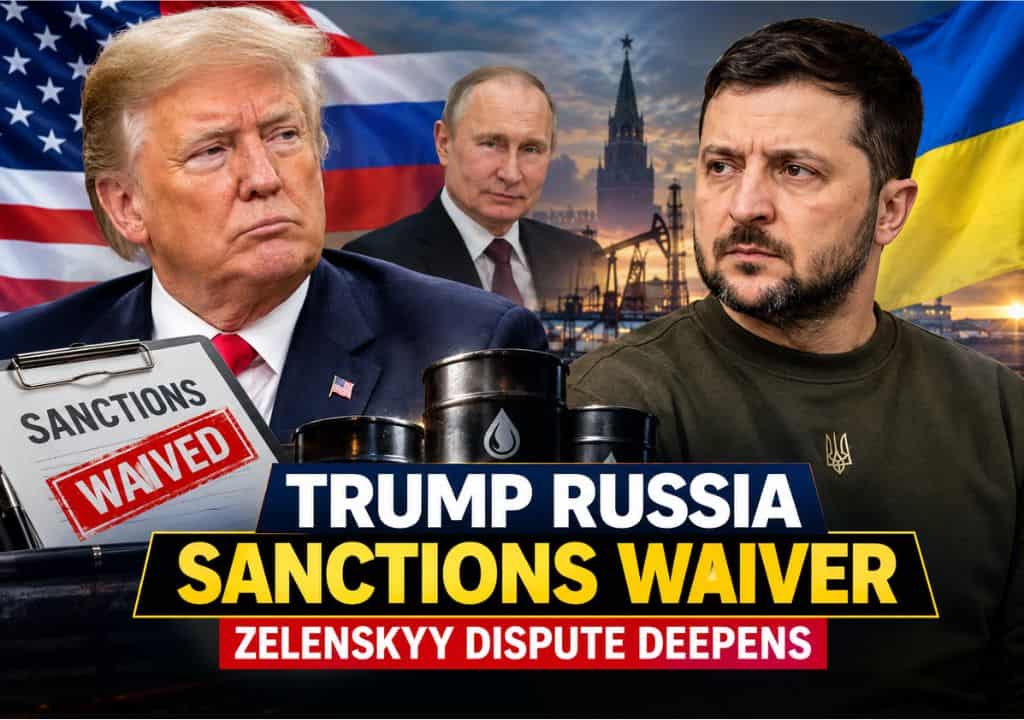
The Trump Russia sanctions waiver has triggered fresh debate over Washington’s policy toward Moscow and its support for Ukraine. On October 16, 2026, US President Donald Trump signed an executive order pausing key sanctions, restrictions and tariffs that were scheduled to take effect under a new law he had signed the previous month. The decision was reported internationally on October 17.
The Trump Russia sanctions waiver comes as relations between Trump and Ukrainian President Volodymyr Zelenskyy face renewed strain. Zelenskyy has urged Washington to maintain economic pressure on Russia, arguing that sanctions could help push Moscow toward ending its invasion of Ukraine.
The new legislation, known as the Lindsey O. Graham Sanctioning Russia and Iran Act of 2026, was designed to increase pressure on Russia’s economy and discourage other countries from purchasing Russian energy or helping Moscow evade existing restrictions. Trump cited US national interests when announcing the waiver, but the White House did not immediately provide a detailed public explanation of the specific considerations behind the decision.
The Trump Russia sanctions waiver has therefore raised several questions: Why were the measures paused before implementation? How could the decision affect Ukraine? What does it mean for Russian energy exports, India and global trade? And could the administration reconsider the restrictions later?
These questions will shape the international response as the Russia-Ukraine war continues.
What Is the Trump Russia Sanctions Waiver?
The Trump Russia sanctions waiver refers to the president’s decision to waive specified measures under the new sanctions legislation before they took effect. The law was intended to strengthen the economic consequences for Russia following its full-scale invasion of Ukraine in February 2022.
The legislation included provisions for tariffs and penalties affecting countries that purchase Russian oil and gas or assist in sanctions evasion. It also targeted Russia’s energy and defence sectors, financial networks and shipping operations associated with the movement of Russian oil.
Under the law, certain countries could have faced tariffs of up to 100% on goods entering the US if they met the legislation’s specified conditions. The measures were intended to increase the cost of continuing energy trade with Russia.
The Trump Russia sanctions waiver does not mean that every US sanction previously imposed on Russia has disappeared. The immediate issue is the implementation of particular new restrictions covered by the executive order. Existing sanctions and any other restrictions not covered by the waiver must be assessed separately.
Reuters reported that Trump justified the decision by certifying to Congress that the waiver was in the national interest of the United States.
Why Did Trump Pause the New Russia Sanctions?
The Trump Russia sanctions waiver followed growing concern about energy prices, diplomatic negotiations and the possible economic consequences of imposing additional trade penalties.
Trump has cited US national interests, but the precise reasoning behind the waiver has not been fully explained publicly. Several issues are relevant to understanding the decision.
Energy prices and fuel supplies
One possible consideration is the cost of fuel. Restricting Russian energy exports or penalising countries that purchase them could affect global oil and fuel markets, depending on how suppliers and buyers respond.
The administration has also announced a proposed arrangement involving Russian diesel supplies. The Associated Press reported that Trump said Russia would supply diesel in several shipments, with the stated objective of helping ease energy-price pressures.
The Trump Russia sanctions waiver therefore intersects with the administration’s energy policy. However, it remains uncertain how much the waiver or the reported diesel arrangement will affect prices paid by consumers.
Diplomatic engagement with Moscow
Another factor is the administration’s continuing effort to influence the course of the Russia-Ukraine war through diplomacy.
Trump has publicly criticised Zelenskyy and suggested that Ukraine needs different leadership. At the same time, the administration has pursued contacts with Russian officials.
Supporters of engagement may argue that diplomatic and economic arrangements can create opportunities for negotiations. Critics counter that easing pressure on Moscow without a verifiable change in its conduct could reduce incentives for Russia to make concessions.
The Trump Russia sanctions waiver has brought this disagreement into sharper focus, although the eventual effect on peace negotiations remains uncertain.
Domestic economic and political pressures
The decision also comes ahead of the November 2026 US midterm elections. Fuel prices, inflation and the economic consequences of international conflict remain important political issues.
The Associated Press reported that the White House had not immediately provided a detailed explanation of how the pause would serve the national interest. That leaves open questions about the relative importance of energy costs, diplomatic calculations and domestic political considerations.
The Trump Russia sanctions waiver should therefore be understood as a policy decision with several possible consequences, rather than evidence of a single confirmed motive.
How Has Zelenskyy Responded?
Ukrainian President Volodymyr Zelenskyy criticised the suspension of the new sanctions, saying the measures could have helped increase pressure on Russia to end the war.
Zelenskyy urged supporters of the legislation in the United States to continue advocating for its implementation. His response reflects Kyiv’s concern that easing economic pressure could allow Moscow to maintain the resources needed to continue military operations.
The Trump Russia sanctions waiver has added to existing disagreements between the two governments over military assistance, intelligence cooperation, negotiations and the conditions for a possible ceasefire.
Ukraine has argued that any settlement must protect its sovereignty and security. The Russian government has its own demands, and the two sides have not reached a comprehensive agreement to end the war.
The dispute also comes after Trump publicly criticised Zelenskyy and questioned his approach to negotiations. Zelenskyy, meanwhile, has sought additional support from European governments as Ukraine continues to defend itself against Russian attacks.
The Trump Russia sanctions waiver does not by itself determine the future of US military aid or all existing sanctions. Those questions depend on separate decisions by the administration, Congress and relevant agencies.
What Does the Decision Mean for Russia?
For Moscow, the Trump Russia sanctions waiver may reduce the immediate threat posed by the new restrictions. If the measures remain paused, some countries and companies may face less immediate uncertainty about the additional penalties specified under the legislation.
Russian officials have welcomed the decision. Reuters reported that Russian envoy Kirill Dmitriev described the waiver positively and suggested it could help restore economic ties between Washington and Moscow.
However, the implications for Russia’s economy should not be overstated. The waiver does not automatically remove every existing restriction on Russian banks, businesses, individuals or energy exports. The impact will depend on which measures remain in force, how the executive order is interpreted and whether further decisions follow.
The Trump Russia sanctions waiver could also influence how companies evaluate the risks of trading with Russia. Businesses often consider not only current restrictions but also the possibility that sanctions could be introduced, restored or expanded later.
For Russia, the longer-term economic consequences will depend on energy revenues, access to international markets, military spending, trade relationships and the continuing effects of other sanctions.
Why India Is Watching the Trump Russia Sanctions Waiver
India is an important part of the international debate because it has been a major purchaser of Russian oil. The proposed US sanctions legislation raised concerns about potential tariffs affecting countries that continued buying Russian energy under the law’s specified conditions.
The Trump Russia sanctions waiver temporarily changes the immediate policy situation for businesses and governments concerned about those proposed penalties. It does not, however, guarantee that future restrictions will never be introduced.
For India, the issue has several dimensions.
First, Russian oil has been part of India’s strategy to diversify energy procurement and manage import costs. Any significant disruption to Russian supplies could affect refinery decisions, shipping costs and energy-market conditions.
Second, trade relations with the United States are important to Indian exporters and manufacturers. Potential tariffs could create uncertainty for companies selling goods to the American market.
Third, New Delhi must balance its economic and diplomatic relationships with Washington, Moscow and other international partners. A change in US sanctions policy can influence those calculations without automatically dictating India’s choices.
The Trump Russia sanctions waiver may ease one immediate source of uncertainty, but Indian companies should continue to monitor official US announcements and applicable trade rules.
The Indian Express report on the proposed sanctions and India provides additional context.
Could the Waiver Affect Global Oil Prices?
Energy markets are sensitive to changes in supply expectations, shipping access, geopolitical tensions and government restrictions. The Trump Russia sanctions waiver has attracted attention partly because the proposed measures could have affected trade with major buyers of Russian oil and gas.
If sanctions are delayed, some market participants may anticipate fewer immediate disruptions to Russian energy exports. That could influence expectations about supply. But the relationship between sanctions and prices is not straightforward.
Oil prices also depend on global demand, production decisions by major exporters, refinery capacity, shipping costs, currency movements and developments in other conflicts.
The waiver alone does not establish that fuel prices will fall. Even if Russian supplies increase, consumers may not see immediate savings because the final price of fuel includes transport, refining, distribution, taxes and other costs.
The Trump Russia sanctions waiver should therefore be treated as one factor in the energy-market outlook, not as a guarantee of cheaper petrol, diesel or heating fuel.
Russia-Ukraine War: Why the Timing Matters
The sanctions decision comes as Russian and Ukrainian forces continue fighting and attacks on energy infrastructure remain a major concern.
Ukrainian officials have reported extensive Russian attacks on energy facilities ahead of winter. Such attacks can threaten electricity supplies, heating and other essential services for civilians.
The Trump Russia sanctions waiver has intensified debate over whether economic pressure should be strengthened or whether Washington should prioritise diplomatic and energy arrangements.
Supporters of sanctions argue that financial and trade restrictions can limit the resources available to Russia and create incentives for negotiations. Critics of broad sanctions argue that they can impose costs on other economies, complicate energy markets and fail to change a government’s military policy.
These arguments involve both economic evidence and political judgment. The effects of sanctions vary depending on their design, enforcement, international participation and the target country’s ability to find alternative trading partners.
The Trump Russia sanctions waiver is therefore part of a wider debate about how the United States and its allies can influence the war’s course while managing economic consequences.
What Happens Next?
The future of the Trump Russia sanctions waiver will depend on decisions by the White House, Congress and other governments.
The executive order allows the administration to reconsider the waived measures. The precise timing and conditions for any future change will be important to monitor.
Key developments to watch include:
Whether the White House publishes a fuller explanation of the waiver.
Whether lawmakers seek to challenge or revise the administration’s approach.
Whether the proposed Russian diesel arrangement proceeds and affects energy supplies.
How Ukraine and European allies respond to the decision.
Whether US officials link future sanctions decisions to verifiable steps toward ending the war.
How energy markets and international businesses respond to changing sanctions risks.
The Trump Russia sanctions waiver could remain temporary, or it could become part of a broader shift in US policy. Neither outcome should be assumed before further official decisions are announced.
Frequently Asked Questions
What is the Trump Russia sanctions waiver?
The Trump Russia sanctions waiver is the decision to pause specified new sanctions, restrictions and tariffs provided for under the Lindsey O. Graham Sanctioning Russia and Iran Act of 2026.
When did Trump announce the waiver?
Trump signed the executive order on October 16, 2026, with international reports published on October 17.
Why did Trump waive the sanctions?
Trump cited US national interests. The administration had not immediately provided a detailed public explanation of all the factors behind the decision.
How has Zelenskyy reacted?
Zelenskyy criticised the pause and urged US supporters of the legislation to continue pushing for measures that could increase pressure on Russia.
Does the waiver end all sanctions against Russia?
No. It concerns specified measures under the new legislation. Other existing sanctions may remain in effect.
How could the decision affect India?
The waiver pauses certain proposed penalties that could have affected countries purchasing Russian energy. Future trade and energy consequences will depend on US policy, market conditions and any subsequent restrictions.
Will the waiver lower fuel prices?
That is uncertain. Oil and fuel prices depend on many factors, and the waiver alone does not guarantee lower prices.
Conclusion
The Trump Russia sanctions waiver marks a significant development in US policy toward Russia and Ukraine. By pausing key new restrictions before they took effect, Trump has changed the immediate outlook for proposed penalties targeting Russian energy trade and countries that purchase Russian oil and gas.
Zelenskyy has criticised the move, arguing that sustained economic pressure is important to ending the war. Russian officials have welcomed it, while US lawmakers and international partners continue to debate its implications.
The consequences will extend beyond Washington and Moscow. India, European governments, energy companies and global markets will be watching for further decisions on sanctions, fuel supplies and diplomacy.
For now, the Trump Russia sanctions waiver is best understood as a pause in specified new measures, not the complete removal of all sanctions on Russia. Its longer-term significance will depend on whether the administration restores the restrictions, modifies them or incorporates the decision into a broader effort to negotiate an end to the war.