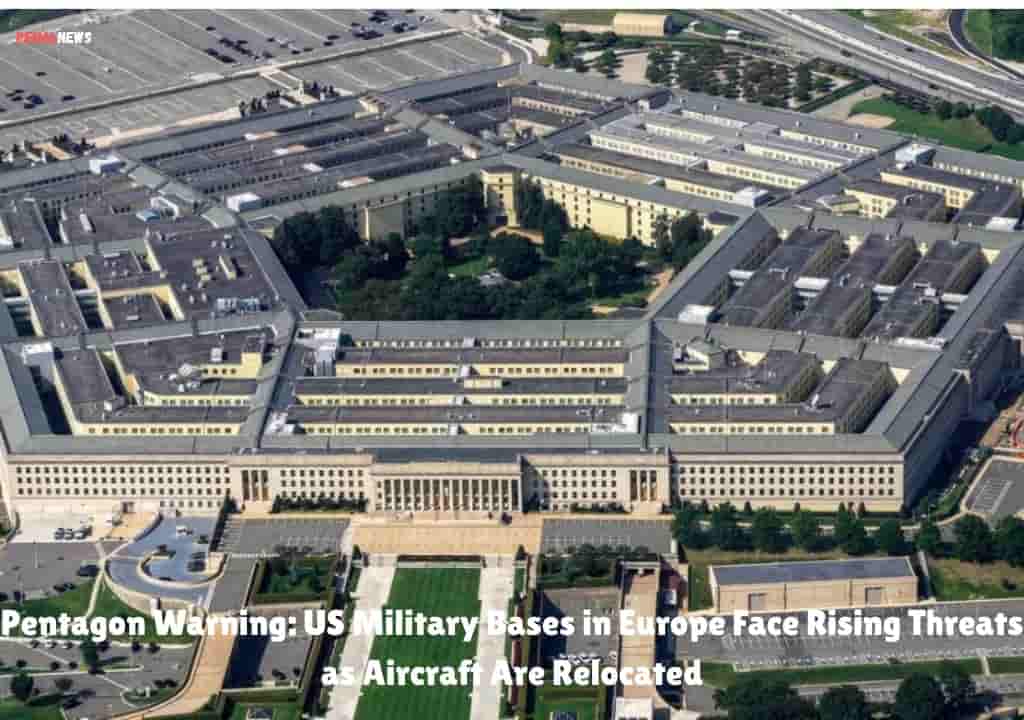
A growing security threat facing American military installations across Europe has prompted heightened security measures, aircraft relocations and new warnings to US military personnel and their families. The latest developments have raised concerns about the safety of American forces stationed overseas as tensions involving Iran and Russia continue to complicate Europe’s security environment.
The latest Pentagon warning comes amid reports that the US Air Force relocated 13 military aircraft from RAF Mildenhall in eastern England to other European locations following a potential security threat. The aircraft were moved to bases in Scotland, Spain and Germany as American officials assessed the situation.
The developments have attracted international attention because RAF Mildenhall and nearby RAF Lakenheath reportedly entered Force Protection Condition Charlie, the second-highest US military security alert level. The move followed reports of a possible threat linked to Iran, although American authorities have not publicly disclosed the full details.
The Pentagon warning story has also gained significance following a security campaign launched by US European Command (EUCOM), which is encouraging American military personnel, civilian employees and their families to take additional precautions.
With suspected terrorist plots, Russian sabotage allegations and cyber threats adding to the security challenges facing Europe, American military commanders are increasingly focused on protecting personnel and installations.
Pentagon Warning: Why Is US Military Security Being Strengthened?
The latest security developments reflect growing concerns about potential threats against American military installations operating across Europe.
According to reporting by Stars and Stripes on November 13, American aircraft were relocated from RAF Mildenhall after reports of a possible threat involving Iran.
The aircraft movements included aerial refueling tankers and other military aircraft. Open-source flight tracking analysts identified 13 aircraft departing the British installation for locations in Scotland, Spain and Germany.
The Associated Press also reported that US officials confirmed the aircraft relocation was connected to a threat.
However, officials did not disclose the precise nature or source of the threat.
A US official described the relocation as a proactive security measure rather than a response to an attack. Some aircraft were permanently stationed at RAF Mildenhall, while others were visiting the installation or operating on a rotational basis.
The Pentagon warning has therefore become an important national security story, although the Defense Department has not publicly issued a specific warning to the American population about an imminent attack.
Instead, the available information points to increased military vigilance and precautionary measures intended to protect American personnel overseas.
US Air Force Relocates 13 Aircraft From RAF Mildenhall
One of the most significant developments involves the relocation of 13 US military aircraft from RAF Mildenhall.
The British installation is an important operating location for American forces in Europe. It hosts the 100th Air Refueling Wing, which operates KC-135 Stratotanker aircraft used to refuel military planes during flight.
These aircraft support American military operations by extending the operational range of fighter jets, bombers and other aircraft.
According to the Associated Press, aircraft departing RAF Mildenhall were relocated to bases in Scotland, Spain and Germany.
The relocation followed reports of a potential security threat. The Wall Street Journal previously reported that the threat was connected to Iran, citing people familiar with the matter.
However, the US officials who spoke to the Associated Press did not publicly confirm the threat’s origin or provide additional operational details.
American officials also emphasized that aircraft can be moved between military installations for several reasons, including training, operational requirements and security considerations.
US Secretary of State Marco Rubio said American forces are regularly repositioned around the world for different reasons.
The aircraft movement nevertheless attracted attention because it occurred during a period of heightened concern about possible attacks against American military installations in Europe.
RAF Mildenhall and RAF Lakenheath Face Heightened Security
The latest Pentagon warning story also involves two strategically important British airbases: RAF Mildenhall and RAF Lakenheath.
Both installations reportedly entered Force Protection Condition Charlie, commonly known as FPCON Charlie.
This is the second-highest level within the US military’s force protection system.
FPCON Charlie applies when an incident occurs or intelligence indicates that some form of terrorist action targeting personnel or facilities may be likely.
The security level signals that military authorities consider the threat environment serious enough to require additional protective measures.
However, the designation does not automatically mean an attack is underway or that an installation has been breached.
The decision to increase security at the British installations came as American officials assessed the potential threat and coordinated protective measures with British authorities.
The United Kingdom has also emphasized that its military airbases remain safe and that protecting personnel and installations is a priority.
For American service members stationed overseas, heightened security can affect daily activities, access arrangements and movement around military facilities.
US European Command Launches ‘See Something, Do Something’ Campaign
Another major development connected to the Pentagon warning involves a security awareness initiative launched by US European Command on November 2, 2026.
The campaign, titled ‘See Something, Do Something,’ is designed to improve security awareness among American service members, civilian employees and military families living across Europe.
EUCOM said the initiative focuses on personal vigilance, community resilience and operational readiness.
The campaign encourages military communities to recognize suspicious activity and report potential security concerns to the appropriate authorities.
It also highlights the importance of protecting personal information and avoiding predictable daily routines.
Among the recommendations are:
Varying commuting routes and travel times.
Avoiding unnecessary disclosure of military movements online.
Reviewing social media privacy settings.
Disabling automatic location tagging on fitness applications and mobile devices.
Reporting suspicious behavior and unattended objects.
Remaining alert in crowded public locations and transportation hubs.
EUCOM Commander Gen. Alexus Grynkewich emphasized that protecting military personnel and their families is a shared responsibility.
The initiative is not limited to a single military installation. It covers American military communities throughout the European theater.
Importantly, EUCOM has not linked the campaign to one specific threat. It is a broader security initiative intended to strengthen protection across the region.
Iran-Linked Terror Plot at RAF Fairford Raises Additional Concerns
The Pentagon warning has become particularly significant because of a separate investigation involving an alleged terrorist plot targeting RAF Fairford in the United Kingdom.
On November 10, the US Department of Justice announced that three alleged Iranian-backed operatives had been indicted in connection with nearly 20 terrorist attacks and attempted attacks across Europe and the United States.
The indictment includes allegations concerning a September 2026 plot targeting RAF Fairford, a British Royal Air Force installation that housed American military aircraft and personnel.
The three defendants identified by the Justice Department are Mohammad Baqer Saad Dawood al-Saadi, Mohsen Mohajeri and Mohammed Ali al-Hassani.
According to prosecutors, the defendants allegedly supported an Iran-aligned network connected to Kata’ib Hezbollah and Iran’s Islamic Revolutionary Guard Corps.
Investigators allege that the network used contacts in the United Kingdom to support the RAF Fairford plot.
The Justice Department also alleges that al-Saadi attempted to coordinate with the other defendants through coded communications while in federal custody.
The allegations are contained in a superseding indictment. The defendants are presumed innocent unless proven guilty in court.
The case has increased attention on the security challenges facing American military facilities overseas.
RAF Fairford had previously been used by US bombers during military operations involving the Middle East.
The investigation also demonstrates why American and British authorities are closely monitoring potential threats against installations hosting US military personnel.
Russia and Cyberattacks Add to Europe’s Security Challenges
The threat environment facing American forces is not limited to concerns involving Iran.
Security officials and military researchers have also raised concerns about Russian espionage, sabotage and cyber operations targeting European countries.
According to Stars and Stripes, several European governments have accused Russia of supporting or directing operations intended to disrupt infrastructure and create instability.
These activities are often described as gray-zone operations because they fall below the traditional threshold of open armed conflict.
Potential tactics include surveillance, cyberattacks, sabotage, disinformation and attempts to interfere with critical infrastructure.
Germany, Romania and other European countries have reported investigations involving suspected sabotage networks and suspicious activity around military-related facilities.
American military installations are particularly important because they support NATO operations, regional deterrence and US military activities beyond Europe.
The combination of conventional military threats and less visible security challenges has encouraged American commanders to strengthen protective measures.
The Pentagon warning therefore reflects a broader concern about how military installations must respond to increasingly complicated security risks.
Why American Military Bases in Europe Matter
American military installations across Europe serve several important strategic purposes.
They provide logistical support, aircraft operations, intelligence coordination, training facilities and rapid access to regions where US forces may be required.
RAF Mildenhall, RAF Lakenheath and RAF Fairford are particularly important because of their connections to American air operations.
RAF Mildenhall supports aerial refueling operations, allowing American aircraft to conduct longer missions.
RAF Lakenheath hosts US Air Force fighter units, while RAF Fairford has supported the deployment and operation of American strategic bombers.
These facilities also contribute to NATO’s wider defense structure.
Their strategic importance makes protecting them a priority for American and British authorities.
Any credible threat against an installation can therefore trigger additional security measures, operational changes and coordination between military commands.
The recent aircraft relocation illustrates how quickly military authorities can adjust operations when potential security concerns emerge.
What the Pentagon Has Confirmed About the Threat
Despite growing attention surrounding the Pentagon warning, several details remain unavailable publicly.
American officials have confirmed that aircraft were relocated following a reported threat and that appropriate security measures were being coordinated.
However, the full intelligence assessment has not been released.
The Pentagon has not publicly provided a complete explanation of the reported threat’s origin, specific target or operational details.
Similarly, EUCOM’s security awareness campaign should not be interpreted as proof of an imminent attack.
The distinction is important because social media posts and online headlines can sometimes exaggerate military developments.
There is currently no verified public evidence from the sources reviewed that an attack on American military bases in Britain is imminent.
There is also no official public instruction telling Americans living in the United States to prepare for an imminent war because of these European security developments.
The confirmed developments concern precautionary military measures, a broader security awareness campaign and ongoing investigations into alleged terrorist activity.
What Happens Next?
The next phase will likely involve continued security assessments and coordination between American and British military authorities.
US European Command will continue its vigilance campaign while military installations review security procedures and protective arrangements.
Investigators will also continue examining the alleged RAF Fairford plot and the wider network described in the Justice Department indictment.
The aircraft relocated from RAF Mildenhall may return depending on operational requirements and security assessments.
For military families living in Europe, the immediate priority remains following installation guidance and maintaining awareness of official security announcements.
The Pentagon warning story is expected to remain relevant as tensions involving Iran and Russia continue to influence European defense planning.
Further information about the reported threat may emerge if American or British authorities release additional details.
Frequently Asked Questions
1. What is the latest Pentagon warning about?
Recent reporting describes heightened security concerns at American military installations in Europe following a reported threat at RAF Mildenhall. The US military has relocated aircraft and encouraged military communities to take additional security precautions.
2. Why did the US move aircraft from RAF Mildenhall?
The US Air Force relocated 13 aircraft after a reported security threat. US officials described the move as a precautionary measure but did not publicly disclose the full nature or source of the threat.
3. What does Force Protection Condition Charlie mean?
FPCON Charlie is the second-highest level in the US military’s force protection system. It indicates that intelligence or an incident suggests terrorist action targeting personnel or facilities may be likely.
4. Is Iran connected to the reported threat?
The Wall Street Journal reported that the threat was connected to Iran, citing people familiar with the matter. However, US officials have not publicly confirmed all details surrounding the specific threat.
5. What is the EUCOM ‘See Something, Do Something’ campaign?
It is a security awareness initiative launched on November 2, 2026, encouraging American military personnel, civilian employees and their families in Europe to report suspicious activity and improve personal and digital security.
6. Were Iranian-backed operatives charged over the RAF Fairford plot?
Yes. The US Justice Department announced terrorism-related indictments against three alleged Iranian-backed operatives on November 10, 2026. Prosecutors allege that they were involved in a plot targeting RAF Fairford. The charges remain allegations unless proven in court.
7. Does the Pentagon warning mean World War III is approaching?
No. The available official statements and reporting do not establish that a world war is imminent. The developments concern military security precautions, reported threats against overseas installations and ongoing counterterrorism investigations.
Conclusion
The latest Pentagon warning developments highlight the growing security challenges facing American military forces stationed across Europe.
The relocation of 13 aircraft from RAF Mildenhall, heightened security at nearby installations and the launch of EUCOM’s ‘See Something, Do Something’ campaign demonstrate how seriously military authorities are approaching the current threat environment.
The Justice Department’s announcement of terrorism-related indictments involving an alleged plot against RAF Fairford has added another important dimension to the situation.
Although the full details of the reported threat remain undisclosed, the developments show why American and British authorities are strengthening cooperation to protect military personnel and strategic installations.
For now, the confirmed situation points to heightened vigilance and precautionary security measures rather than evidence of an imminent attack or a new global war.
As investigations continue and military authorities assess the evolving situation, further official announcements could provide a clearer picture of the threats facing American forces in Europe.