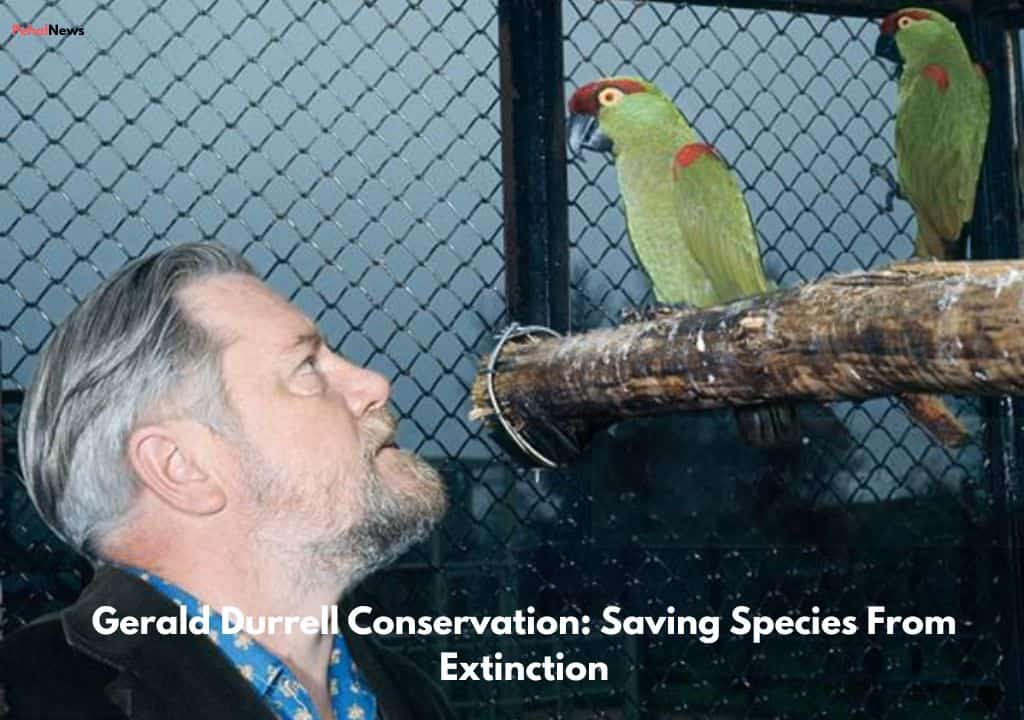
Gerald Durrell changed the way people viewed zoos by making wildlife protection their central purpose. His conservation legacy continues through endangered-species breeding, habitat restoration and community-led projects around the world.
Introduction: Gerald Durrell’s Mission to Save Species From Extinction
Gerald Durrell conservation has become an enduring example of how one person’s fascination with wildlife can develop into a global effort to protect endangered animals. British naturalist, author and conservationist Gerald Durrell believed that zoos should do more than display animals to visitors. He wanted them to help prevent extinction by protecting vulnerable species, supporting scientific research and preparing animals for survival in the wild.
A recent BBC Witness History feature revisited Durrell’s pioneering work and the opening of Jersey Zoo in 1959. The programme highlighted his determination to create a different kind of zoological institution-one that placed the survival of threatened wildlife at the centre of its purpose.
Durrell’s work was shaped by what he witnessed during his travels. Animals were disappearing as natural habitats were destroyed and human activities placed growing pressure on wildlife. He believed that conservation needed practical action, long-term commitment and public support.
Today, the organisation he founded continues to pursue that mission. The story of Gerald Durrell conservation remains relevant as wildlife faces habitat loss, illegal trafficking, environmental degradation and other human-driven threats.
Who Was Gerald Durrell?
Gerald Durrell was born in India in 1925 and spent much of his childhood on the Greek island of Corfu. His experiences there helped develop his fascination with animals and the natural world. He later became known internationally as a writer and naturalist whose work introduced generations of readers to wildlife.
His memoir, My Family and Other Animals, brought his childhood adventures in Corfu to a broad audience. The book helped establish his reputation as an engaging storyteller, but his ambitions extended beyond literature.
Durrell became increasingly concerned about the treatment of animals and the decline of species during his travels. He recognised that traditional zoological collections often prioritised exhibition, while endangered animals needed more focused protection and carefully managed breeding programmes.
This concern became a defining element of Gerald Durrell conservation. He wanted institutions to help threatened species survive, rather than simply maintain animals in captivity for public viewing.
According to Durrell Wildlife Conservation Trust, his work helped pioneer the concept of zoo-led conservation. His vision connected animal care, research, public education and the longer-term goal of protecting wildlife populations in their natural environments.
How Jersey Zoo Changed the Conservation Approach
In 1959, Durrell opened Jersey Zoological Park, now known as Jersey Zoo. The project reflected his belief that a zoo could become a centre for endangered-species protection.
Instead of focusing exclusively on popular animals, Durrell wanted to give attention to species that were threatened but often overlooked. His approach placed importance on specialist animal husbandry, breeding knowledge and the preservation of wildlife that might otherwise disappear.
Establishing the zoo required financial resources, and Durrell used his writing to help fund the project. His books made his experiences accessible to readers while supporting the practical conservation work he wanted to establish.
In 1963, he created a charitable trust to oversee the zoo and expand conservation activities beyond Jersey. The organisation later became known as Durrell Wildlife Conservation Trust.
The development of Jersey Zoo was significant because it connected public engagement with a specific conservation objective. Visitors could learn about endangered wildlife while supporting an institution working to protect it.
Gerald Durrell conservation therefore offered a different way of understanding the role of zoos. Animal care, scientific knowledge, education and the recovery of threatened populations became connected parts of a broader mission.
Why Gerald Durrell Believed Endangered Species Needed Protection
Durrell understood that extinction is not simply the disappearance of an individual animal. When a species vanishes, it can also remove an important part of an ecosystem and reduce the diversity of life on which natural environments depend.
During his career, he observed how human activities could damage habitats and threaten animal populations. Habitat destruction, exploitation and unsustainable wildlife collection were among the pressures that concerned him.
His response was practical: protect vulnerable animals, develop breeding programmes where appropriate, improve knowledge of their needs and support efforts to restore populations in the wild.
The Gerald Durrell conservation model also recognised that different species require different solutions. Some animals need carefully managed breeding populations. Others depend on habitat restoration, reduced hunting pressure, stronger protection against illegal trade or collaboration with communities living alongside wildlife.
Captive breeding alone cannot solve every conservation problem. Animals must have suitable habitats and the conditions needed to survive and reproduce. Reintroduction programmes also require planning, monitoring and long-term support.
Durrell’s approach helped make these connections central to the organisation’s work.
From Captive Breeding to Wildlife Recovery
Captive breeding can play an important role when a species has become dangerously rare in the wild. A carefully managed population may help preserve genetic diversity and provide animals for future reintroduction, provided the original threats can be addressed.
Jersey Zoo developed expertise in animal husbandry, research and endangered-species breeding. These capabilities form part of Durrell Wildlife Conservation Trust’s current work.
However, successful conservation requires more than producing offspring in captivity. Specialists must consider genetic health, disease risks, behaviour, habitat suitability and the causes of population decline.
Reintroducing animals into the wild may be possible when their habitat is secure enough and other threats have been reduced. In some cases, conservation teams also need to restore ecological processes or work with local people to reduce conflicts between human activities and wildlife.
Gerald Durrell conservation helped establish this wider perspective: zoos can contribute to wildlife recovery when their work is connected to evidence-based conservation outside their own boundaries.
The Trust’s current approach combines zoo-based work with field conservation, scientific research, training and cooperation with partners. Its stated ambition extends beyond preventing extinction to recovering threatened species populations and restoring ecosystems.
The Ploughshare Tortoise: A Continuing Conservation Challenge
One example of the Trust’s long-term conservation work involves Madagascar’s ploughshare tortoise, also known as the angonoka tortoise. This critically endangered reptile is native to a restricted area of northwestern Madagascar and has been threatened by illegal collection for the wildlife trade.
The tortoise illustrates why conservation needs sustained attention. When a species has a small natural range and a very limited population, the loss of even a relatively small number of animals can have serious consequences.
Durrell and its partners began a ploughshare tortoise conservation programme in 1986. In 2026, the organisation marked four decades of commitment to protecting the species.
The work reflects several principles associated with Gerald Durrell conservation: specialist animal care, long-term breeding efforts, scientific expertise and cooperation with people and organisations working in the species’ native environment.
Illegal wildlife trafficking remains a major challenge for rare animals sought by collectors. Breeding programmes can help protect a species, but they must be accompanied by measures that address poaching, illegal trade and the security of wild populations.
The ploughshare tortoise programme demonstrates that conservation is not a short-term campaign. It requires sustained investment, reliable information and cooperation across many years.
Conservation Beyond Jersey: Working With Communities
Although Jersey Zoo remains central to the Trust’s identity, Gerald Durrell conservation was never intended to stop at the zoo’s boundaries.
Durrell Wildlife Conservation Trust works with partners in different regions to recover threatened wildlife, restore habitats and strengthen local conservation expertise. Its projects recognise that people who live near wildlife habitats are essential participants in long-term protection.
Conservation initiatives can involve restoring degraded land, removing invasive species, rebuilding ecological functions and helping threatened animals recover. The appropriate approach depends on the species, the habitat and the pressures affecting the local environment.
The Trust also supports conservation training through its programmes in Jersey and Mauritius. Training can help conservationists and partner organisations develop the skills needed to manage projects, monitor populations and evaluate results.
Community involvement is equally important. Wildlife protection is more likely to endure when local people have meaningful opportunities to participate and when conservation programmes take account of livelihoods and local priorities.
This work reflects a central lesson of Gerald Durrell conservation: saving a species often requires action across an entire ecosystem, not just intervention focused on individual animals.
Why Scientific Research Matters
Durrell’s original vision was built on practical animal care, but modern conservation also depends on rigorous scientific evidence.
Researchers need to understand population trends, breeding success, habitat conditions and the threats affecting each species. Monitoring helps determine whether a project is producing measurable results and whether its methods need to change.
Durrell Wildlife Conservation Trust says its conservation science work helps guide strategies, monitor threats and evaluate the impact of its activities. The organisation also works with external partners, including universities, conservation organisations and local communities.
Scientific evaluation matters because well-intentioned projects do not always achieve their intended outcomes. Breeding animals, moving them to new locations or changing a habitat can carry risks if decisions are not supported by suitable evidence.
The Gerald Durrell conservation legacy therefore involves more than passion for animals. It also includes the need to test approaches, learn from results and adapt conservation methods as new information becomes available.
The Role of Books and Public Education
Durrell’s success as an author helped finance his conservation ambitions and brought wildlife into the lives of readers who might never have visited a zoo or encountered a rare animal.
His writing combined humour, observation and affection for the natural world. By sharing stories about animals and his experiences in the field, he helped audiences develop an emotional connection with wildlife.
That connection remains important today. Conservation organisations need public understanding and support to sustain field projects, scientific research, education and habitat protection.
Zoos can provide opportunities for people to learn about threatened species and the pressures affecting their survival. Books, documentaries, educational programmes and digital media can extend that learning far beyond the zoo itself.
Gerald Durrell conservation shows how storytelling can support practical environmental work. Information about endangered species becomes more meaningful when people understand the animals as living creatures with complex needs, rather than simply names on a list of threatened wildlife.
Public engagement cannot replace conservation expertise, but it can help build the support needed for long-term action.
The Challenges Facing Wildlife Conservation Today
Durrell’s mission remains relevant because species continue to face human-driven pressures. Habitat loss and fragmentation can prevent animals from finding food, shelter or suitable breeding grounds. Illegal wildlife trade can put additional pressure on already vulnerable populations.
Climate change can also alter habitats, seasonal patterns and the availability of resources. Invasive species and pollution may create further problems, depending on the ecosystem involved.
These threats often overlap. Protecting an endangered animal may require action against illegal hunting, habitat restoration, scientific monitoring and cooperation with local authorities and communities at the same time.
Financial and logistical challenges can also affect conservation programmes. Restoring a population may take decades, while the funding and public attention available to support it can fluctuate.
Gerald Durrell conservation offers a reminder that extinction prevention requires persistence. Short-term successes are valuable, but the long-term health of a species depends on whether it can maintain a viable population in a suitable environment.
Gerald Durrell’s Legacy in 2026
Gerald Durrell died in 1995, but the organisation he established continues to pursue his central mission. Durrell Wildlife Conservation Trust describes its work as a combination of species recovery, ecosystem restoration and reconnecting people with nature.
The Trust’s wider ambition is not merely to keep endangered animals from disappearing. It seeks to restore threatened populations and help ecosystems become more diverse and resilient.
Its activities bring together conservation work in the wild, specialist animal care at Jersey Zoo, research, training and public engagement. These different elements reflect Durrell’s belief that the future of wildlife depends on practical action supported by knowledge and public commitment.
The BBC’s October 2026 Witness History feature has brought renewed attention to how Durrell developed his idea of a zoo dedicated to saving endangered species. His story offers a useful historical perspective on the development of modern conservation and the continuing importance of protecting animals that receive relatively little public attention.
The Gerald Durrell conservation legacy is not simply a tribute to one naturalist. It is an ongoing effort involving conservationists, researchers, communities, supporters and partner organisations.
Conclusion: A Mission That Continues
Gerald Durrell transformed his love of animals into a conservation project with an international reach. By opening Jersey Zoo in 1959 and establishing a charitable trust in 1963, he helped build an organisation focused on saving threatened wildlife.
His approach connected specialist animal care with breeding programmes, scientific research, education and the protection of natural habitats. Projects such as the long-running ploughshare tortoise programme demonstrate why this work demands commitment over many years.
Today, Gerald Durrell conservation remains relevant because preventing extinction requires more than awareness. It requires reliable science, practical intervention, habitat protection, community cooperation and sustained public support.
Durrell’s story also demonstrates the value of communication. His books helped fund his ambitions and encouraged readers to care about the natural world. That combination of storytelling and action remains a powerful model for conservation.
As species and ecosystems face continuing pressure, the mission he began at Jersey Zoo carries an important message: wildlife protection must focus not only on keeping animals alive today, but also on creating conditions in which their populations can recover and thrive in the wild.
Frequently Asked Questions
1. Who was Gerald Durrell?
Gerald Durrell was a British naturalist, author and conservationist born in India in 1925. He founded Jersey Zoo in 1959 and established a charitable trust in 1963 to support endangered-species conservation.
2. What was Gerald Durrell’s mission?
His mission was to save species from extinction. He believed zoos should contribute to wildlife protection through specialist animal care, breeding programmes, research, education and conservation work.
3. What is Jersey Zoo famous for?
Jersey Zoo is known for its role in endangered-species breeding, animal care, research, education and conservation. It was established by Durrell as a zoo with wildlife protection at the centre of its purpose.
4. What is the Durrell Wildlife Conservation Trust?
Durrell Wildlife Conservation Trust is an international conservation charity founded by Gerald Durrell. It works to recover threatened species, restore ecosystems, train conservationists and reconnect people with nature.
5. Why is the ploughshare tortoise important to Gerald Durrell conservation?
The ploughshare tortoise is a critically endangered species native to Madagascar. Durrell and its partners began a conservation programme for the tortoise in 1986, demonstrating the importance of sustained breeding and protection efforts.
6. How can people support endangered-species conservation?
People can support reputable conservation organisations, learn about threatened species, avoid products linked to illegal wildlife trade, support habitat protection and share reliable information about conservation challenges.