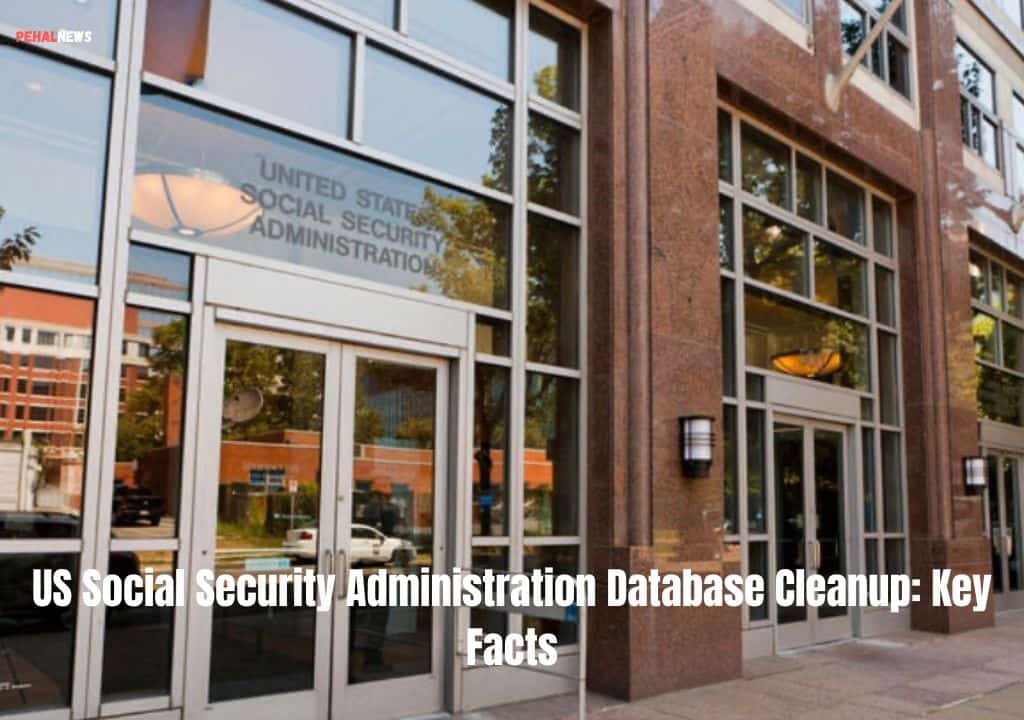
The US Social Security Administration database cleanup has become a major development in American government administration after the agency announced that it had corrected records associated with nearly 15% of active Social Security numbers. The initiative aims to improve the accuracy of identity information, strengthen recordkeeping and support the proper administration of government benefits.
On October 20, 2026, the Social Security Administration (SSA) described the initiative as the most comprehensive Social Security number database cleanup in its 91-year history. The agency said it had added missing death dates to millions of records, updated citizenship information and begun correcting further records containing inaccurate citizenship status.
The announcement is significant because Social Security records are used by federal and state agencies to verify identities and administer various public programs. Inaccurate information can complicate eligibility checks, create administrative problems and potentially contribute to improper payments.
However, the US Social Security Administration database cleanup should not be interpreted as proof that every corrected record involved fraud. The SSA’s announcement describes missing and inaccurate information; it does not establish that every affected person received an improper payment or that every record required a benefits decision.
The announcement also does not say that all people whose information was updated will see a change in their monthly Social Security payments.
What Records Did the SSA Update?
The US Social Security Administration database cleanup focuses on gaps and errors in the agency’s Social Security number database. According to the SSA, the work has involved three major groups of records.
1. Seventeen million death dates added
The SSA said it had added approximately 17 million dates of death to records that previously lacked this information. It used data from its own systems and the US Department of State to make these updates.
Death information is important because government agencies use it when determining whether certain benefits should continue and whether eligible family members may qualify for survivor benefits.
A missing death date does not automatically mean that a deceased person was receiving benefits improperly. Records can remain incomplete for administrative reasons, and an agency must establish whether a record is connected to an actual payment before drawing conclusions about improper payments.
The US Social Security Administration database cleanup is intended to make death-related records more complete, helping agencies work with more accurate information.
2. Approximately 25 million citizenship records updated
The agency also reported updating around 25 million records that had missing citizenship information. According to the SSA, it used information received through the Department of Homeland Security’s Systematic Alien Verification for Entitlements service, commonly known as SAVE.
Citizenship and immigration-related information can be relevant to certain government eligibility checks. Having complete records can help agencies verify information more efficiently, although eligibility for Social Security programs depends on the specific benefit and the individual’s circumstances.
An update to a citizenship field does not, by itself, establish that a person was ineligible for benefits or had provided false information.
The US Social Security Administration database cleanup therefore involves both improving the completeness of records and ensuring that information used for verification is accurate.
3. Another 8.5 million records still being corrected
The SSA said it was working to correct an additional 8.5 million records containing inaccurate citizenship status.
This figure needs to be distinguished from the records already updated. The agency described this group as work in progress, so it would be misleading to report all 8.5 million as completed corrections.
Taken together, the figures illustrate the scale of the initiative. However, they should not simply be added together and described as a confirmed number of fraud cases or unique beneficiaries affected. The SSA has not made such a claim in its announcement.
Why Is the US Social Security Administration Database Cleanup Happening?
The SSA says accurate identity records are essential to maintaining the integrity of government services. Federal and state agencies rely on its data to verify identities and help prevent improper payments.
The US Social Security Administration database cleanup is part of a broader effort by the Trump administration to address fraud, waste and administrative weaknesses across government programs.
SSA Commissioner Frank J. Bisignano said the accuracy of the Social Security number database is essential to proper public administration. The agency also said it had introduced stronger internal controls intended to prevent errors caused by manual data entry.
The initiative addresses a longstanding administrative challenge: large government databases contain information collected over many years, sometimes from different agencies and reporting systems. Records can be incomplete, inconsistent or affected by human error.
Correcting those problems can help improve the information available to government workers and other authorised users. Nevertheless, the effectiveness of the US Social Security Administration database cleanup will depend on whether corrections are accurate, properly documented and maintained over time.
Could the Database Cleanup Affect Monthly Social Security Payments?
This is one of the most important questions for retirees, disabled workers, survivors and other people who rely on Social Security.
Based on the SSA’s October 20 announcement, the US Social Security Administration database cleanup does not introduce a new benefit payment amount or a new eligibility rule. The agency has not announced an automatic increase or reduction in monthly payments as a result of the record corrections.
The number of records updated also does not tell readers how many individual benefit payments, if any, have changed because of the initiative.
Accurate records can still matter in individual cases. For example, incorrect death information can cause serious problems if a living beneficiary is mistakenly recorded as deceased. Inaccurate personal information can also require review when an agency verifies someone’s identity or eligibility.
Anyone who receives an unexpected notice or experiences an unexplained interruption in benefits should contact the SSA directly to clarify the reason. A person should not assume that a payment problem is necessarily related to the database initiative.
The US Social Security Administration database cleanup announcement does not instruct all beneficiaries to submit new documents or take immediate action.
Concerns About Accuracy, Oversight and Privacy
Although better records can strengthen public administration, the US Social Security Administration database cleanup also raises questions about how sensitive information is checked, corrected and shared.
The SSA Office of the Inspector General published an audit on July 2, 2026, examining cases in which living beneficiaries had been incorrectly recorded as deceased and those death records were later removed.
The audit reported that the SSA had identified 12,504 erroneous death records among approximately 5.6 million death records posted to the Death Master File in calendar year 2025. In a sample of cases involving incorrect death records that were later removed, auditors found that employees had not documented the reasons for the original entries or their removal in 45% of the cases examined.
These findings concern a particular audit and should not be confused with the millions of records covered by the current cleanup. They do, however, illustrate why accurate data and proper documentation must go together.
When information is wrong, the consequences can be serious. A person incorrectly marked as deceased may face problems proving their identity or resolving a benefits interruption. Correcting an error also requires a clear record of what happened and why.
The US Social Security Administration database cleanup will therefore need to balance the goal of more reliable information with safeguards that protect individuals from incorrect changes.
There are also concerns about the quality of information supplied by other agencies. Some critics have questioned the reliability of SAVE data used for citizenship verification. These concerns are relevant to oversight, but they do not independently establish that the latest SSA updates are inaccurate.
What Should Social Security Beneficiaries Do Now?
For most people, there is no need to panic because of the US Social Security Administration database cleanup announcement. The SSA has not instructed all beneficiaries to submit documents or reapply for benefits as part of the initiative.
People who want to review their information can visit the official my Social Security portal, where registered users can access available earnings and benefit information.
If a record appears incorrect, or if a payment is unexpectedly interrupted, contact the SSA using details obtained directly from its official website. Keep copies of relevant notices and documents, and ask the agency to explain the issue and the steps needed to resolve it.
People should also be alert to scams. A news announcement about a government database does not mean that individuals must provide their Social Security number, banking information or identity documents to an unsolicited caller, email sender or text message.
The US Social Security Administration database cleanup does not, according to the published announcement, create a new requirement for every beneficiary to verify their information through a third-party website.
What Happens Next?
The SSA says its work is continuing, including the correction of another 8.5 million records with inaccurate citizenship status. The agency has also introduced stronger internal controls designed to reduce future manual data-entry errors.
The next important questions will be whether the agency can maintain accurate information, explain its correction procedures and demonstrate that the changes improve administration without creating unnecessary problems for eligible beneficiaries.
The US Social Security Administration database cleanup is a substantial administrative effort, but its overall impact cannot be judged from the number of records alone. Useful measures will include the accuracy of corrections, the frequency of errors, the handling of appeals and the effect on the timely delivery of benefits.
Transparent reporting will help the public distinguish between incomplete records, genuine fraud and ordinary administrative mistakes. It will also help lawmakers and oversight bodies assess whether the new controls are working as intended.
Frequently Asked Questions
1. What is the US Social Security Administration database cleanup?
It is an SSA initiative to improve the accuracy of Social Security number records by adding missing death dates, updating citizenship information and correcting inaccurate records.
2. How many records have been affected?
The SSA says it has corrected records associated with nearly 15% of active Social Security numbers. It reported adding 17 million death dates and updating approximately 25 million records with missing citizenship information. Another 8.5 million records with inaccurate citizenship status were still being corrected.
3. Will the cleanup reduce Social Security payments?
The SSA has not announced an automatic reduction or increase in benefits because of the cleanup. Any individual payment issue should be checked directly with the agency.
4. Does a corrected record mean fraud occurred?
No. A missing or inaccurate record is not, by itself, proof of fraud or improper payments. The SSA’s announcement does not identify every corrected record as a fraud case.
5. Do beneficiaries need to take action?
The SSA has not instructed all beneficiaries to submit new documents because of this initiative. People who want to review their information can use the official my Social Security portal or contact the agency if they identify an error.
6. Where can readers find official information?
The most reliable starting point is the SSA’s official announcement, alongside information from the agency’s Office of the Inspector General.
Conclusion
The US Social Security Administration database cleanup marks a significant effort to improve the accuracy of government identity records. The SSA says it has added millions of missing death dates, updated citizenship information and begun correcting additional records that contain inaccurate status information.
The initiative could improve the information used to administer public programs, but the scale of the work should not be confused with a confirmed count of fraud cases or people whose benefits will change.
For beneficiaries, the central message is straightforward: the announcement alone does not mean monthly payments will automatically change, and the agency has not required everyone to take new action. People who encounter an unexpected problem should verify it directly with Social Security.
Ultimately, the success of the US Social Security Administration database cleanup will depend not only on correcting records, but also on ensuring that those corrections are accurate, transparent and fair to the people whose information is involved.